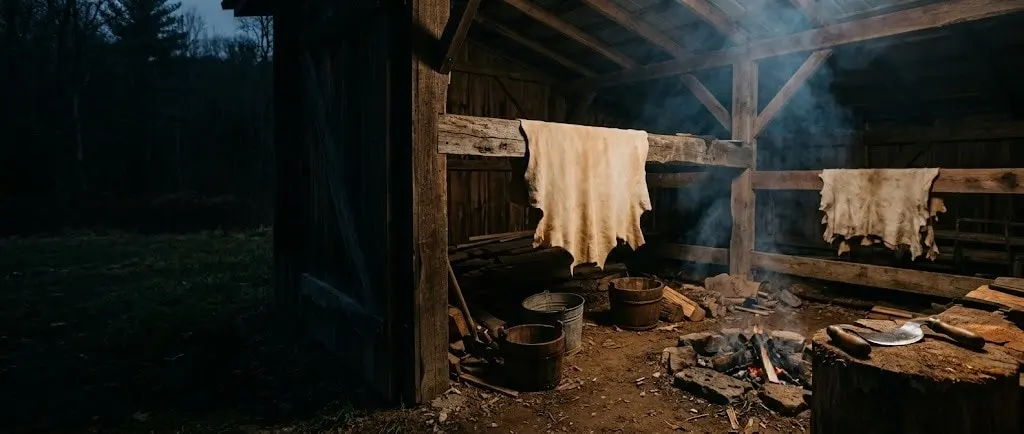
 AI illustration
Hide tanning
Flesh, dress and soften a deer hide into buckskin with salt, eggs and a great deal of pulling. Old, physical, and nothing like buying leather.
What it is like
Tanning stops a skin from rotting and keeps it flexible. The traditional buckskin method uses fat instead of tannin: an emulsion worked into the wet hide, then hours of stretching as it dries, then smoke to set it. The result is buckskin, soft as flannel and washable.
Deer hides turn up in hunting season. Hunters and meat processors are the usual source, so ask before the season starts.
It is real labor. Fleshing takes an hour or two, softening takes an afternoon of continuous pulling, and none of it can be hurried. Bark tanning trades that sweat for weeks of waiting and gives a firmer leather for sheaths and belts.
What makes buckskin soft is a process. The fat emulsion coats the fibers inside the hide, and continuous stretching while the hide dries keeps those fibers from gluing together; smoke then sets the result so it survives getting wet. Skip or rush any of those steps and the hide dries hard, which is why tanners talk about the softening stage as the one that decides the whole hide.
Most people learn from a book, a class or someone who has done it, and the first hide is rarely perfect - a stiff corner or a thin spot is normal. By the third or fourth the fleshing is cleaner, the grain comes off evenly and the softening goes faster, and the hides start turning into bags, moccasins and knife sheaths.
- A session
- Fleshing takes an hour or two; softening is a long afternoon of continuous pulling.
- A week
- A hide over two hard weekends, with soaking days between.
- Season
- Hides come in hunting season; salted or frozen hides can wait for warmer weather.
Outdoors · Solo, For two
Kinds and styles
Hair and grain removed, fat emulsion worked in, softened by stretching and then smoked - the method on this page.
The same process without smoke, giving a pale leather that stiffens more after getting wet.
Weeks in a liquor of oak or other bark tannins, for firm leather that can be tooled and molded.
Tanned with the hair left on for rugs and throws; the flesh side is worked without slipping the hair.
Scraped and dried without tanning - hard and strong, for drum heads, lacing and lashing.
Bought tanning solutions that follow a product sheet; quicker, but with chemicals to handle with care.
Is it for you?
You will probably love it if
- You hunt, or know a hunter or a processor who throws hides away
- You like hard physical work with a clear result
- You have outdoor space and running water
Maybe not, if
- Raw hide, fat and smell are a problem for you
- You want a hobby you can pause for a month mid-step
- You have no legal source of hides
What to buy first
- 01Two-handled fleshing knifePushes fat, meat and membrane off the hideFind it on Amazon$30
- 02Non-iodized salt, 25 lb bagA raw hide spoils in hours; salt buys weeksFind it on Amazon$10
- 03Storage tote with a lid, about 20 gallonFor soaking and for the bucking stepFind it on Amazon$7
- 04Fleshing beam: a smooth peeled log, about 6 ftA round surface to lean the hide over, propped at waist height; 6 inch PVC pipe from a plumbing supplier also worksFree
- 05One dozen eggsThe yolks are the dressing that makes buckskin soft$2
- Everything you need to beginAbout $5 a month after that$49
Typical US prices for entry-level gear, rounded. Last checked October 2026. How we get the numbers
The Amazon links open a search for that type of item, not a product chosen for us, and the prices in the list are our typical figures, or the listing of the shop a line names, not Amazon's price for any listing. If you buy through one we may earn a commission at no extra cost to you; as an Amazon Associate we earn from qualifying purchases.
What to buy next
- 01Graining tool or scraperRemoves the grain layer faster and more evenlyFind it on Amazon Second hide
- 02Heavy rubber glovesProtect hands from raw hide and caustic ash waterFind it on Amazon Every hide
- 03Stretching frameHolds a hide taut for scraping and softeningFind it on Amazon Larger or fur-on hides
- 04Buckskin sewing awl and sinewStitch buckskin into bags and clothingFind it on Amazon Making things
- 05Tanning bookStep-by-step guidance from experienced tannersFind it on Amazon Planning the next hide
No prices here on purpose: these are later buys, and what to spend depends on how far the hobby has taken you. The Amazon links work like the ones above: a search for the type of item, and a possible commission for us at no extra cost to you.
From a fresh deer hide to smoked buckskin, step by step
Buckskin is made by scraping a hide, working a fat emulsion into it - traditionally brains, here egg yolks - and smoking it; the result is soft, porous and stronger than chamois (Wikipedia). This guide goes from saving the hide to fleshing, removing hair and grain, dressing, softening and smoking, with the choices at each step. It is physical work spread over days.
Warning: Before you start Wear gloves when handling raw hides and wash up well afterwards. Wood ash water and hydrated lime are caustic: wear gloves and eye protection and keep them away from children and pets. Smoke hides outdoors over a smolder, never a flame. Use only hides from legally taken animals and check your state's rules on possessing and selling wildlife parts.
The day it comes off the animal: spread it flat, rub a full layer of salt into the flesh side, or roll and freeze it.
Hide over the beam, flesh side up. Push the dull blade away from you in overlapping strokes until every scrap of fat and membrane is gone.
Soak in water with wood ash until the hair pulls free, then scrape hair and the thin grain layer off on the same beam. Rinse well.
Wring the hide hard, then work in a warm emulsion of egg yolks and water. Wring and repeat.
Pull and stretch the hide over a stake or a taut cable without stopping until it is completely dry. Stop early and it dries stiff.
Smoke both sides over smoldering punky wood. Smoke makes the softness survive getting wet.
Fleshing over the beam
From the side: the hide flesh side up on a leaning beam, the knife pushed away from you.
- A Flesh side Up Worked clean in overlapping strokes. Step 2 →
- B Fleshing knife Dull, two-handled Pushed away from you. Step 2 →
- C Hair side Down Hair and grain come off after the ash soak. Step 3 →
- D Fat and membrane Every scrap off Before the ash soak. Step 2 →
- E Beam Smooth The hide laid over it. Step 2 →
Steps 1-3Save and clean the hide
- Step 1 of 8 · Save and clean the hide
Salt it or freeze it
Warning: NOTICE Use only hides from legally taken animals and check your state's rules on possessing and selling wildlife parts. Wear gloves with raw hides and wash well afterwards.
Raw hides spoil fast. Commercial tanneries salt hides to stop bacteria and putrefaction (Wikipedia). The day it comes off the animal, spread the hide flat and rub a full layer of non-iodised salt into the flesh side, or roll and freeze it.
Goes wrong: Waiting to salt. In warm weather a raw hide can spoil within hours.
- Step 2 of 8 · Save and clean the hide
Flesh it
Lay the hide over a smooth beam, flesh side up, and push a dull two-handled fleshing knife away from you in overlapping strokes until every scrap of fat and membrane is gone.
Goes wrong: Patchy fleshing. Leftover fat and membrane leave stiff, untanned spots.
- Step 3 of 8 · Save and clean the hide
Remove the hair and grain
Warning: CAUTION Wood-ash water and hydrated lime are caustic: gloves and eye protection, and keep them away from children and pets.
In tanneries, liming swells the fibres and loosens the hair, and what remains is scraped off with a dull knife - scudding (Wikipedia). At home, soak the hide in water with wood ash until the hair pulls free, then scrape hair and the thin grain layer off on the beam and rinse well.
Most people: hair and grain off (buckskin).
Start here Hair and grain offBest forBuckskin
The soft, suede-like leather of this guide.
Hair left onBest forRugs and throws
The flesh side is worked without slipping the hair.
Goes wrong: Grain left in patches. It dries hard and shiny.
Steps 4-6Dress and soften
- Step 4 of 8 · Dress and soften
Dress it
Wring the hide hard, then work a warm emulsion of egg yolks and water into it. Wring and repeat until the hide takes no more.
Most people: egg yolks (home tanners).
Start here Egg yolksBest forHome tanners
Easy to get; works like the traditional brain dressing.
BrainsBest forTraditional method
The classic dressing for buckskin (Wikipedia).
- Step 5 of 8 · Dress and soften
Work it until dry
Pull and stretch the hide over a stake or a taut cable without stopping until it is completely dry; this is what makes it soft.
Goes wrong: Stopping too early. A hide left to finish drying on its own goes stiff.
- Step 6 of 8 · Dress and soften
Check it all over
Any stiff patch means the dressing or the work missed it: dampen, dress and work that area again.
Steps 7-8Smoke and next
- Step 7 of 8 · Smoke and next
Smoke it
Warning: CAUTION Smoke outdoors over a smoulder, never an open flame.
Smoke both sides over a smoulder of punky wood, the hide sewn into a bag over the smoke. Smoke gives some water resistance and keeps insects off (Wikipedia); unsmoked buckskin is white and stiffens more after getting wet.
Goes wrong: Skipping the smoke. Unsmoked buckskin stiffens badly when wet - rubbing it by hand softens it again.
- Step 8 of 8 · Smoke and next
Choose a next method
Wikipedia describes the other routes from hide to leather.
Most people: rawhide (drums and lashing).
Bark tanningBest forFirm leather
Weeks in a tannin liquor of bark and leaves; leather for tooling and moulding.
Start here RawhideBest forDrums and lashing
Scraped and dried untanned: hard and strong.
Kit tanningBest forFaster results
Bought solutions used to the product sheet; chemicals to handle with care.
In shortIf it goes wrong
- Waiting to salt.
- Step 1 · Salt it or freeze it
- Patchy fleshing.
- Step 2 · Flesh it
- Grain left in patches.
- Step 3 · Remove the hair and grain
- Stopping too early.
- Step 5 · Work it until dry
- Skipping the smoke.
- Step 7 · Smoke it
How you get better
- First hideOne deer hide to buckskin
Salted, fleshed, dehaired, egg-dressed, softened and smoked, with help if you can find it.
- Hides 2 to 4Smoother results
Thinner, more even fleshing and graining, and softening without stiff patches.
- Year 1 to 2Rawhide and bark tan
Rawhide for lacing and drums, and a bark-tanned hide for sheaths and belts.
- Year 2Fur-on hides
Hair-on tanning for a rug or throw.
- After thatClothing and bags
Sewing buckskin into pouches, moccasins and garments, and teaching others.
- Salting and freezing hides
- Fleshing on a beam
- Slipping hair
- Removing the grain
- Wringing
- Mixing and working a dressing
- Softening by stretching
- Smoking
- Bark tanning
- Fur-on tanning
- Making rawhide
- Sewing buckskin
Small things that help
- Salt or freeze a hide the day it comes off the animal.
- Flesh thoroughly; anything left blocks the dressing.
- Keep the hide wet and workable until the dressing stage.
- Wring hard before dressing so the hide can soak it up.
- Never stop pulling until the hide is completely dry.
- Smoke both sides; it keeps buckskin soft after rain.
Beginner mistakes
- 01Waiting to saltRaw hides spoil fast in warm weather. Salt or freeze at once.
- 02Patchy fleshingLeftover fat and membrane leave stiff, untanned spots.
- 03Missing grainPatches of grain left on dry hard and shiny. Scrape it all.
- 04Stopping too earlyA hide left to finish drying on its own goes stiff. Keep working it.
- 05Skipping the smokeUnsmoked buckskin stiffens badly when wet. Smoke it.
Three roads to leather
| Method | Tanning agent | Time | Result |
|---|---|---|---|
| Brain or egg tan | Emulsified fat, then smoke | A weekend of labor | Soft, washable buckskin |
| Bark tan | Tannin from oak or spruce bark | 3 to 6 weeks in liquor | Firm leather for sheaths and belts |
| Kit tan | Bought tanning solution | A few days | Follow the product sheet exactly |
Why people quit
- 01A hide that waitedUnsalted over a warm weekend it rots and the hair slips in patches. Salt or freeze on day one.
- 02Poor fleshingAnything left on the hide is a spot the dressing cannot reach. It decides the whole tan.
- 03Stopping the softeningBuckskin has to be worked the whole time it dries. This is hours, and it is the price.
Words you will meet
- Flesh side
- The inside of the hide, where fat and membrane are scraped off.
- Grain
- The thin outer layer under the hair, removed for buckskin.
- Fleshing beam
- A smooth log or pipe the hide is draped over for scraping.
- Slipping
- Loosening the hair so it scrapes off.
- Bucking
- Soaking a hide in an alkaline solution such as wood ash water.
- Dressing
- The emulsion of brains, eggs or soap worked into the hide.
- Buckskin
- Soft, smoked, brain or egg tanned deer hide.
- Rawhide
- Hide scraped and dried without tanning.
- Tannin
- Plant compounds used in bark tanning.
- Chrome tanning
- Industrial tanning with chromium salts, developed in the 1800s.
Questions people ask
Where do I get a deer hide?
From your own hunting or from hunters and meat processors in season. Use only legally taken animals and check your state's rules.
Can I use eggs instead of brains?
Yes. Egg yolks are a common dressing for buckskin and easy to buy.
How long does it take?
Two hard weekends for a first hide, with soaking time between steps.
Why is my buckskin stiff?
Usually leftover grain, too little dressing, or stopping the softening before the hide was completely dry.
Do I have to smoke it?
Smoking keeps buckskin soft after it gets wet and helps deter insects. Unsmoked hides stay lighter but stiffen more.
Where to go next
- 01LeathercraftCutting and sewing the leather you made. $119 to start
- 02Fish leatherThe same idea on a small, thin skin, tanned in a jar. $28 to start
How it compares
| Hide tanning | Leathercraft | Fish leather | Knife handle making | |
|---|---|---|---|---|
| Start cost | $49 | $119 | $28 | $72 |
| Each month | $5 | $20 | $2 | $15 |
| Space | A yard | A desk | A jar and a table edge | A bench with a vise |
| Noise | Quiet | Low | Quiet | Low |
| First result | 2 hard weekends | 1 weekend | About 2 weeks | 1 weekend |
| Mess | Hair, fat and water | Scraps and dye | Fishy water | Dust |
Sources: Wikipedia, Tanning (leather) (history) · Wikipedia, Buckskin (leather)
Researched and written by the Fjords Team.