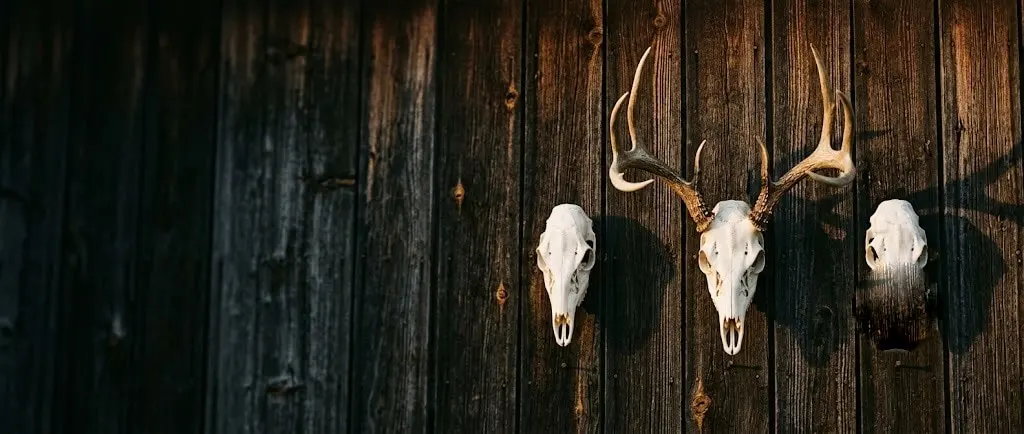
 AI illustration
Skull cleaning
Turn a deer skull into a clean white European mount: simmer, pick, degrease, whiten. Patient, smelly work with a result that lasts.
What it is like
A European mount is a cleaned and whitened skull, with antlers if the animal had them, hung bare or on a plaque. It is one of the plainest kinds of trophy, and done properly it stays clean and white.
The work is four steps: a gentle simmer, picking, a long degreasing soak, and whitening with peroxide. None is hard. The third is boring and invisible, which is why rushed skulls yellow.
Start with a deer from your own or a friend’s season. The same method cleans any legally kept skull, and a shelf of them becomes a small natural history collection.
Bone is porous, and grease is the enemy hiding inside it. Simmering gently loosens the tissue so it can be picked away, but it is the long, warm soapy soak that draws fat out of the bone itself; skip it and the skull looks fine for months, then slowly turns blotchy yellow as the grease surfaces. Whitening comes last and is cosmetic - it cannot fix grease left behind, only make clean bone look cleaner.
Done well, the result is a clear look at how an animal was built: the sutures where skull bones meet, the wear on the teeth, the sockets of the eyes and the curve of the jaw. Many people who start with a single deer from a hunting season end up keeping a small labeled collection, which is as much natural history as trophy.
- A session
- An afternoon for skinning and simmering, then short checks.
- A week
- One to three weeks of degreasing with water changes.
- Season
- Most often in hunting season; cool months make the smell easier to manage.
Outdoors · Solo
Kinds and styles
A whitened deer, elk or other skull, often with antlers, hung on a wall or plaque - the project on this page.
Rabbit, fox or raccoon skulls from legal sources, cleaned more gently because of thin bone.
Cleaning by controlled decay in warm water instead of simmering; slower to start but gentle on bone.
Dermestid beetle colonies, as museums use - effective, but a colony needs space and care.
Labeled skulls and bones kept for study, with species, place and date for each.
Wooden plaques, stands and wall hangers for finished mounts.
Is it for you?
You will probably love it if
- You hunt, or legally find skulls, and want to keep them well
- You can do a dull step for weeks without skipping it
- You have outdoor space and tolerant neighbors
Maybe not, if
- Smell and raw tissue put you off
- You want it on the wall this weekend
- You cannot check where the skull came from and whether you may keep it
What to buy first
- 01Stock pot, 20 quart, never used for food againBig enough to cover a deer skull with the antlers clearFind it on Amazon$39
- 02Dish soap, large bottleThe degreaser for the whole processFind it on Amazon$6
- 035 gallon bucket with a lidThe degreasing soak lives in it for weeksFind it on Amazon$6
- 04Aquarium heater, 100 WWarm water pulls grease out several times fasterFind it on Amazon$24
- 0540 volume cream peroxide developerWhitens bone without eating it, unlike bleachFind it on Amazon$8
- 06Nitrile gloves and safety glassesStrong peroxide burns skin and eyesFind it on Amazon$12
- Everything you need to beginAbout $5 a month after that$95
Typical US prices for entry-level gear, rounded. Last checked October 2026. How we get the numbers
The Amazon links open a search for that type of item, not a product chosen for us, and the prices in the list are our typical figures, or the listing of the shop a line names, not Amazon's price for any listing. If you buy through one we may earn a commission at no extra cost to you; as an Amazon Associate we earn from qualifying purchases.
What to buy next
- 01Wall plaque or skull hangerDisplays the skull securelyFind it on Amazon Finished mount
- 02Bone glueClear glue for loose teeth and small cracksFind it on Amazon Teeth and repairs
- 03Second bucket and heaterRun two degreasing soaks at onceFind it on Amazon More than one skull
- 04Small picks and brushesReach nasal passages and small cavitiesFind it on Amazon Detail cleaning
- 05Specimen labels and notebookRecords species, place, date and sourceFind it on Amazon Starting a collection
No prices here on purpose: these are later buys, and what to spend depends on how far the hobby has taken you. The Amazon links work like the ones above: a search for the type of item, and a possible commission for us at no extra cost to you.
From a legal skull to a clean white mount, step by step
Cleaning a skull is removing tissue, then grease, then colour, without harming the bone. This guide goes from the law and safe handling to the three cleaning methods, degreasing and whitening, with the choices at each step. Methods follow Wikipedia's account of how museums prepare skeletons; health advice is the CDC's.
Warning: Before you start Check the law before you pick anything up. In the United States nearly all wild birds are protected by the Migratory Bird Treaty Act, and keeping their skulls, bones or feathers is illegal without a permit; marine mammals and many other species have their own rules. Deer, elk and moose heads fall under state chronic wasting disease rules that restrict moving them between areas. Wear gloves and eye protection with 40 volume peroxide, never mix it with other chemicals, and never use bleach on bone.
Take off the hide, the eyes and what meat comes easily. Start the same week or freeze the skull; warm and bagged for days is what ruins it.
Antlers propped clear of the water, two to four hours at a bare simmer with a squirt of dish soap. A rolling boil cooks grease into the bone and loosens the sutures.
Wire, pliers and an old knife while it is warm. Flush the brain cavity with a hose. Keep any loose teeth to glue back.
Warm soapy water in the bucket, changed whenever it clouds, for one to three weeks, until the water stays clear and the bone looks matte.
Wrap the antler bases, paint on the peroxide cream, leave it a day, rinse, dry in the sun. Glue the teeth back and hang it.
Tissue, grease, colour
The same skull through the three stages.
- A Tissue Simmer 2-4 hours Or macerate about 10 days. Step 4 →
- B Grease 1-3 weeks Water changed when it clouds, until it stays clear. Step 6 →
- C Colour Peroxide, not bleach Chlorine bleach leaves bone chalky and brittle. Step 7 →
Steps 1-2Before you start
- Step 1 of 8 · Before you start
Check the law
In the US nearly all wild birds are protected by the Migratory Bird Treaty Act, and keeping their skulls, bones or feathers without a permit is illegal; marine mammals and many other species have their own rules. Deer, elk and moose fall under state chronic wasting disease rules that restrict moving heads between areas.
Goes wrong: Keeping protected species. A found bird skull is usually illegal to keep.
- Step 2 of 8 · Before you start
Handle deer and elk safely
Warning: CAUTION Wear gloves throughout, keep the work outdoors or in a shed, and use a pot and tools that will never go back to the kitchen.
For deer and elk, the CDC advises wearing latex or rubber gloves, avoiding the brain and spinal tissue, not using knives or tools from your kitchen, and leaving alone animals found dead or that looked sick.
Steps 3-5Cleaning
- Step 3 of 8 · Cleaning
Take off what comes easily
Skin the head and remove the eyes and what meat comes away easily. Start the same week or freeze the skull: warm and bagged for days is what ruins it.
- Step 4 of 8 · Cleaning
Choose how to clean it
The soft tissue can come off in three ways.
Most people: simmering (deer skulls, quickly).
Start here SimmeringBest forDeer skulls, quickly
The short version above: antlers propped clear of the water, two to four hours at a bare simmer with dish soap, then picked while warm.
Warm-water macerationBest forGentle on bone
Controlled decay in a closed container, usually around 35°C and never above 50°C; a dog-sized animal takes about ten days (Wikipedia).
Dermestid beetlesBest forSmall, fragile skulls
Museums use them for small mammals, birds and reptiles, whose bones would fall apart; a colony needs space and care.
Goes wrong: Boiling hard. A rolling boil cooks grease into the bone and loosens the sutures; keep to a bare simmer.
- Step 5 of 8 · Cleaning
Pick and flush
Wire, pliers and an old knife while the skull is warm; flush the brain cavity with a hose. Keep any loose teeth to glue back later.
Steps 6-8Finishing
- Step 6 of 8 · Finishing
Degrease for weeks
Fat left in bone stains it brown over time (Wikipedia). Soak the skull in warm water with a mild detergent, changing it whenever it clouds, for one to three weeks, until the water stays clear and the bone looks matte; an aquarium heater keeps the bucket warm.
Goes wrong: Skipping degreasing. Grease shows later as yellow patches.
- Step 7 of 8 · Finishing
Whiten without bleach
Warning: CAUTION Strong peroxide burns skin and eyes: gloves and safety glasses, and never mix it with other chemicals.
Wikipedia notes that chlorine bleaches such as hypochlorite leave bone chalky and brittle. Hydrogen peroxide is gentler.
Most people: peroxide cream (deer mounts).
Dilute peroxide soakBest forSmall or delicate skulls
1-3% hydrogen peroxide, refreshed every few days, whitening over a week or two (Wikipedia).
Start here Peroxide creamBest forDeer mounts
The short version's method: painted on, left a day, rinsed. Wrap the antler bases first.
Goes wrong: Peroxide on antlers. It bleaches their colour; wrap the bases.
- Step 8 of 8 · Finishing
Glue, label and display
Glue loose teeth back, then hang the mount or label the skull with species, place and date, as natural history collections do.
In shortIf it goes wrong
- Keeping protected species.
- Step 1 · Check the law
- Boiling hard.
- Step 4 · Choose how to clean it
- Skipping degreasing.
- Step 6 · Degrease for weeks
- Peroxide on antlers.
- Step 7 · Whiten without bleach
How you get better
- First skullA whitetail European mount
Simmer, pick, degrease for weeks, whiten and hang.
- Skulls 2 to 3Cleaner results
Better picking, longer degreasing and no yellow patches a year later.
- Year 1 to 2Small skulls and maceration
Gentler methods for thinner bones.
- Year 2A labeled collection
Each specimen with its species, place, date and legal source.
- After thatBeetles or display work
A dermestid colony, or plaques and mounts for friends' skulls.
- Checking what you may legally keep
- Skinning and rough cleaning
- Gentle simmering
- Picking and flushing
- Saving loose teeth
- Degreasing
- Judging when grease is gone
- Peroxide whitening
- Protecting antlers
- Gluing teeth and repairs
- Labeling specimens
- Mounting and hanging
Small things that help
- Check the law before collecting or keeping any skull.
- Start the same week or freeze the skull.
- Simmer gently; never boil.
- Keep loose teeth in a labeled bag.
- Degrease until the water stays clear for days.
- Use peroxide, never bleach, and protect the antlers.
Beginner mistakes
- 01Boiling hardCooks grease in and loosens sutures. Keep to a bare simmer.
- 02Skipping degreasingGrease shows as yellow patches later. Soak for weeks.
- 03Using bleachBleach eats bone and leaves it chalky. Use peroxide cream.
- 04Peroxide on antlersIt bleaches the antler color. Wrap the bases.
- 05Keeping protected speciesWild bird skulls and many other parts are illegal to keep without permits.
Why people quit
- 01Yellow patches a year laterGrease left in the bone. The long soak is the step everyone skips and the whole difference.
- 02A skull that fell apartBoiled too hard or too long. Simmer gently and stop when the flesh pulls free.
- 03The smellIt is real for the first two steps. Work outdoors and do not use the kitchen.
Words you will meet
- European mount
- A cleaned and whitened skull displayed without skin.
- Degreasing
- Soaking bone in warm soapy water to remove fat.
- Maceration
- Cleaning bone by controlled decay in water.
- Dermestid beetles
- Skin beetles used by museums to clean skeletons.
- Sutures
- The joints between skull bones.
- 40 volume developer
- Cream hydrogen peroxide used to whiten bone.
- Burr
- The rough ring at the base of an antler.
- CWD
- Chronic wasting disease, which affects deer, elk and moose.
- Osteology
- The scientific study of bones.
Questions people ask
Why not use bleach?
Bleach damages bone and leaves it chalky; cream peroxide whitens without eating it.
How long does a European mount take?
About three to four weeks, mostly the degreasing soak.
Can I keep a bird skull I found?
In the US, nearly all wild birds are protected by the Migratory Bird Treaty Act, so usually not without a permit.
Why do some skulls turn yellow?
Grease left in the bone works its way out over time. Degrease longer.
Can I move a deer head across state lines?
Chronic wasting disease rules often restrict moving deer, elk and moose heads; check your state's rules.
Where to go next
- 01Shed huntingAntlers found on the ground, legal to keep in many places, with no cleaning at all. Free to start
- 02Rock collectingAnother natural history collection, built on labels with place and date. $83 to start
How it compares
| Skull cleaning | Shed hunting | Rock collecting | Birdwatching | |
|---|---|---|---|---|
| Start cost | $95 | Free | $83 | $161 |
| Each month | $5 | Free | Free | Free |
| Space | A yard or a garage | Fields and woods | A shelf with labels | Anywhere outside |
| Noise | Quiet | Quiet | Quiet | Quiet |
| First result | 3 to 4 weeks | A few walks | The first find | Same day |
| Mess | Grease and smell | Muddy boots | Dust and mud | None |
Where to learn more
- 01U.S. Fish & Wildlife Service, Migratory Bird Treaty ActThe federal law protecting nearly all wild birds and their parts.
Sources: U.S. Fish & Wildlife Service: Migratory Bird Treaty Act of 1918 · CDC: Chronic Wasting Disease · Wikipedia, Dermestidae (museum skeleton cleaning) · Wikipedia, Maceration (bone) · Wikipedia, Osteology
Researched and written by the Fjords Team.